Mini Golf Game - Putt Putt 3D
ViralMedia-MLMSports
4.2446.00 Reviews
- Version
- 4.0
- Installs
- 100.00K
- Age Rating
- Everyone
Screenshots
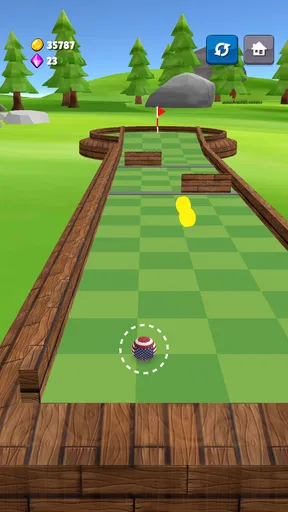
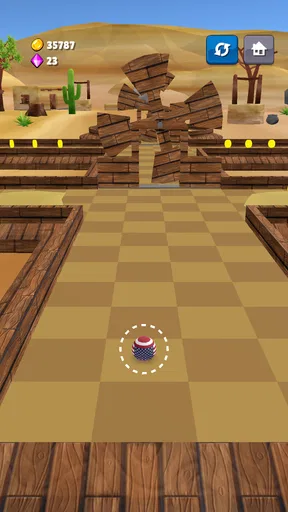
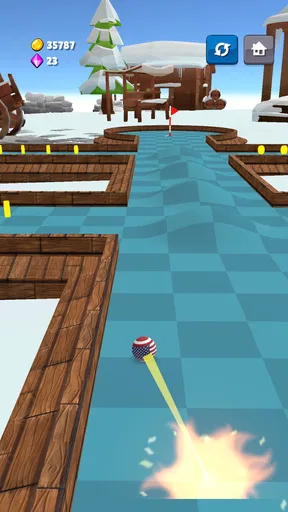
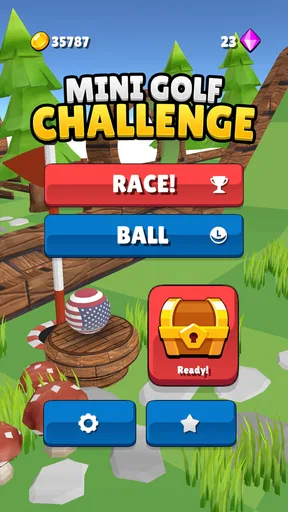
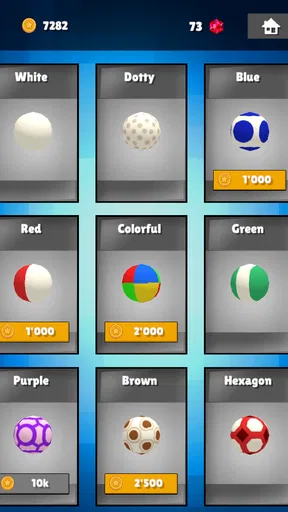
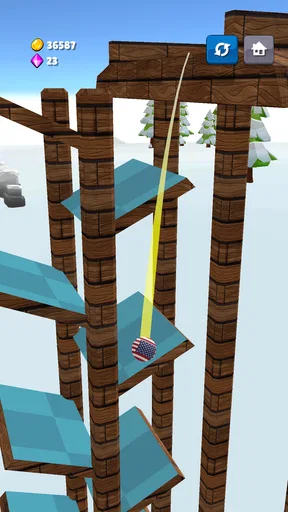
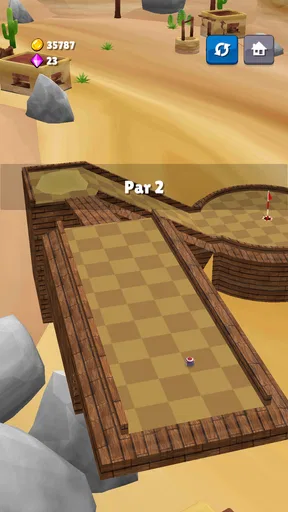
Our Review of Mini Golf Game - Putt Putt 3D
 Analysis by Appyee
I spent time with Mini Golf Game - Putt Putt 3D as a lightweight sports game, paying particular attention to how easily different people can understand the play area, control a shot, and enjoy a round in everyday situations. It is a free mini golf title from ViralMedia-MLM, rated for Everyone, and its basic appeal is immediate: line up a putt, judge the strength, and try to finish each hole efficiently. The presentation is simple rather than elaborate, which can be a real advantage when you want a quick game instead of a large, demanding sports simulation.
That simplicity also sets the right expectations. I would not approach this as a full golf career game or as a substitute for a polished console-style sports title. Its strength is the small, focused challenge of putting around compact courses, with physics that make each attempt feel dependent on angle and force. I found it most enjoyable in short sessions, especially when I wanted something competitive but did not want to learn a complicated control system first.
How the game reads and guides you through a round
I found that the game’s clearest guidance comes from the way each hole makes the next decision visible: identify the target, read the boundaries, and decide whether a direct line or a rebound looks safer. That keeps the round approachable, but it also means the player does much of the planning rather than relying on detailed prompts. In the next section, I’ll look at how that hands-on approach shapes the feel of a shot.
A clear starting point for casual players
The short description calls it “Mini Golf Game,” and that plain wording matches the experience. There is little conceptual overhead: the objective is to get the ball into the hole using as few strokes as possible. For a new player, that makes the first round approachable. You do not need to understand a roster, a long progression tree, or a collection of sport-specific rules before taking a shot.
In my experience, the most important visual task is separating the ball, the target, and the course boundaries. Mini golf naturally creates this kind of visual puzzle, because a wall or raised edge can turn a direct shot into a banked shot. Players who are comfortable scanning a small game board should settle in quickly. Someone with reduced visual clarity may need more time to distinguish surfaces and judge where the ball will stop, particularly when several course elements sit close together.
The game’s compact format helps navigation because the action is concentrated around the current hole. I did not feel as if I were moving through a large world or searching through layers of menus before playing. That matters for children, occasional players, and anyone who prefers a game that explains itself through interaction rather than extended instructions.
Why the physics are both readable and demanding
The physics are central to the game’s character. A gentle shot can leave the ball short, while an overly strong attempt can send it toward a barrier or away from the intended line. This gives each hole a useful rhythm: first read the space, then choose a direction, then decide how much force the situation deserves. The result is more engaging than simply tapping the hole and watching an automatic result.
There is a small but important accessibility trade-off here. Physics create meaningful decisions, yet they also require visual prediction and controlled input. A player who finds timing, dragging, or directional gestures difficult may experience the game as tiring rather than relaxing. The same is true for someone who prefers predictable outcomes. The challenge is not only knowing what to do; it is translating that decision into a sufficiently accurate shot.
I recommend beginning with conservative attempts. Rather than trying to reach the hole in one dramatic move, I found it more useful to treat the first stroke as a positioning shot whenever the route was uncertain. This reduces the punishment from a bad bounce and makes the course easier to understand. It is a practical approach for new players and for anyone who benefits from breaking a task into smaller actions.
Multiplayer works best when everyone shares the same pace
The game is designed around multiplayer mini golf, which gives it a different feel from a solitary putting toy. A short match can work well when friends or family members are sitting together and taking turns. The rules are easy to explain, so a person who has never played before can join without studying a manual.
That same simplicity means the social experience depends heavily on the people playing. I would choose it for a relaxed group where players are happy to wait, compare shots, and laugh at awkward bounces. It is less suitable for a group that expects deep competitive systems, extensive customization, or a large range of modes. The appeal comes from the shared act of solving each hole, not from a broad esports-style structure.
For a family setting, I would let younger players experiment with power before focusing on scores. That removes pressure and makes the physics feel like part of the fun. For more competitive friends, keeping track of strokes can add a little structure even when the game itself stays uncomplicated. These small changes in how you play can make the same title feel either cooperative and playful or more focused and tactical.
Small-screen readability and practical habits
On a phone, I found that holding the device steady helps with both reading the course and making a controlled shot. A crowded environment can make that harder, especially when reflections or movement compete with the game board. Playing with the screen at a comfortable brightness and taking a moment to inspect the hole before touching the controls is more useful than rushing into the first attempt.
I also suggest avoiding rapid repeated input. In a physics-based game, an accidental touch at the wrong moment can change the result more than a player expects. A deliberate pause between shots makes the experience easier to follow and gives players who need extra processing time a fairer chance to plan.
Motor demands and sensory comfort
The main motor requirement is precision. You need to aim and apply an appropriate level of force, and the quality of a shot depends on how consistently you can perform that action. This is manageable for many players because the interaction is narrower than the control scheme of a racing game or a full golf simulation. Still, “simple” does not mean effortless. Repeated attempts can become uncomfortable for people with hand fatigue, tremors, limited range of motion, or difficulty with fine gestures.
I would approach it in short rounds rather than treating it as a long session. That is not merely a comfort tip; it also improves performance. When I became impatient, I tended to overhit and misread rebounds. A short pause between holes helped me return to the course with a clearer sense of direction and force.
Players with motor limitations may enjoy the strategic side while finding the execution less forgiving. The game is therefore a better fit for someone who can make small, controlled inputs than for someone looking for a fully relaxed game in which accuracy is optional. If a player needs alternative controls, remapping, switch support, or a guaranteed low-precision mode, I would not assume this title provides those options.
Visually, the game’s sports setting is less intense than an action game filled with flashing effects and rapid camera movement. That can make it feel calmer in ordinary play. However, individual sensory needs vary, and a player who is sensitive to movement, contrast, or repeated visual changes should test a short session before committing to longer play. I would also avoid using it in a moving vehicle or in a place with unstable lighting, because judging a small course already requires attention.
Audio is not something I would use as the primary source of information while playing. The important feedback is visual: where the ball is, how the course is shaped, and how the shot develops. That makes the game more workable for someone who does not rely on sound, but it also means that strong visual access is especially important. I would keep the device positioned directly in front of the player rather than at an awkward angle.
Playing in different everyday situations
A realistic use case is a short break between tasks. I can imagine opening it while waiting for an appointment, playing a few holes, and stopping without needing to remember a complicated story or rebuild a large strategy. The free price makes that kind of low-commitment use appealing. It is also a reasonable choice for a parent who wants a simple game to share with a child, provided the child can manage the aiming interaction and the adult is comfortable with the available purchase model.
It can also fit a small social gathering. Two or more people can take turns, discuss the best route, and compare whether a direct shot or a bank off the wall is safer. Because the objective is familiar, the game does not demand much explanation. That makes it more inclusive for mixed groups in which some players are experienced gamers and others rarely play on a phone.
On the other hand, I would be cautious about recommending it for noisy public spaces or situations where the player must constantly look away from the screen. A missed visual cue can ruin a carefully planned shot, and the game does not seem designed for divided attention. It is also not my first choice for someone who wants a game that can be enjoyed entirely through sound or with minimal visual tracking.
The minimum operating-system requirement is Android 7.1, so owners of compatible older devices may be able to try it without needing a recent phone. The current version is 4.0. That makes it worth checking device compatibility before planning a group session, especially when several people want to play on different phones. The game is available at no upfront cost, while in-app purchases are listed at $3.99 per item, so I would review the purchase flow before handing the device to a child.
Where the experience still creates barriers
The biggest barrier is the connection between visual judgment and physical control. A player may understand the ideal route but still struggle to reproduce it accurately. In a game built around putting physics, there is no easy way to separate planning from execution. That is a genuine limitation for people who need highly forgiving controls or who cannot comfortably perform repeated precision gestures.
Another barrier is the possibility of uneven participation in multiplayer sessions. A confident player can quickly learn how to use walls and force, while a newcomer may need several holes to understand why a shot bounced away. If the group focuses only on the lowest score, that learning gap can make the game feel exclusionary. I think it works better when experienced players explain their choices and give beginners room to experiment.
The age rating of Everyone makes the game broadly suitable in tone, but an age rating does not guarantee that every control or visual element will suit every child. Younger players may need help with device handling, purchase awareness, and patience after a poor shot. I would treat it as a shared activity at first rather than assuming a child will immediately navigate every part independently.
There is also a difference between accessibility and simplicity. A small number of actions may be easier to learn, but that does not automatically mean the game offers dedicated support for players with disabilities. I would not select it expecting documented accessibility settings, alternative input methods, adjustable text, or specialized visual modes. Anyone who depends on those features should test the actual installation carefully and keep expectations modest.
Who should choose it, and who should look elsewhere
I think this game is a good match for players who enjoy compact sports challenges, casual multiplayer, and the satisfaction of improving through better judgment. It is especially appealing if you like games that can be understood within a few minutes but still reward attention to angles and strength. The 4.2 average from around 2.1 thousand ratings, together with more than 100 thousand installs, suggests that it has found a substantial audience for this straightforward style of play.
I would recommend it to a friend who wants a free mini golf game for occasional sessions, a simple family competition, or a quick distraction that does not require a long commitment. The developer, ViralMedia-MLM, keeps the concept focused on putting rather than surrounding it with unnecessary complexity. That focus is its clearest strength.
I would steer a different friend toward another kind of sports game if they want realistic golf courses, extensive player development, advanced online competition, or a large set of accessibility controls. Someone who dislikes trial and error may also become frustrated, because the physics are part of the challenge rather than a minor decoration. Likewise, players who need hands-free interaction or very low-precision controls should not choose it without first confirming that the controls are comfortable for them.
Compared with a physical mini golf outing, this is cheaper and easier to start, but it cannot reproduce the social atmosphere, full-body movement, or tactile feel of standing beside a real course. Compared with a large mobile golf simulation, it is quicker to understand and less demanding in terms of menus and long-term commitment, but it offers a narrower kind of depth. Its best middle ground is a digital putting challenge that friends can pick up without preparation.
My inclusive verdict
After playing it with accessibility and context in mind, I see Mini Golf Game - Putt Putt 3D as an approachable casual sports game with a meaningful precision requirement. Its uncluttered idea helps many players get started, and the multiplayer focus gives it value beyond practicing alone. The physics create satisfying moments when a carefully judged rebound works, but they also expose the game’s main weakness: players who cannot comfortably aim or control force may find the central mechanic difficult.
My practical advice is to try a short session first, play on a stable screen, inspect each hole before acting, and use conservative shots until the rebound behavior becomes familiar. In a group, encourage players to compare decisions rather than treating every hole as a test of speed or skill. Those habits make the experience more welcoming without pretending that the game includes accessibility tools that have not been established.
For me, the final decision is straightforward. Choose it if you want a free, easy-to-explain mini golf game for brief solo play or relaxed multiplayer, and if visual aiming with controlled input suits you. Skip it if you require alternative controls, extensive customization, or a deeper simulation. Its strongest inclusive quality is its easy-to-understand objective, while its biggest remaining barrier is the precision needed to turn a good plan into a successful putt.
Verdict
Strengths of Mini Golf Game - Putt Putt 3D
- Simple controls make it easy for beginners to start playing.
- Short holes are convenient for quick gaming sessions.,3D visuals give the courses a pleasant miniature-golf feel.
- Offline play is useful when you have no internet connection.
- Different obstacles add variety and keep rounds from feeling repetitive.
Limitations of Mini Golf Game - Putt Putt 3D
- Some levels may feel too easy for experienced mini-golf players.
- Physics can occasionally make shots feel less predictable.
- The game may become repetitive after extended play.
- Ads can interrupt the experience between rounds.
- Limited customization reduces long-term appeal for some players.
Other Releases by ViralMedia-MLM
View All
Worde: Daily & Unlimited
Word4.3
Similar Picks in This Category
View All
8 Ball Pool
Miniclip.com4.8

Pooking - Billiards City
AIM TOP GAME TECHNOLOGY LIMITED - pool4.6

Carrom Pool: Disc Game
Miniclip.com4.4

EA SPORTS FC Soccer Mobile 26
ELECTRONIC ARTS4.6

World Soccer League
mobirix4.3

Soccer Cup 2026: Football Game
INLOGIC SPORTS - football tennis golf soccer4.3
Frequently Asked Questions
What is Mini Golf Game - Putt Putt 3D?
Mini Golf Game - Putt Putt 3D is a casual putting game built around short, obstacle-filled courses. Players aim, adjust the strength of each shot, and try to complete every hole in as few strokes as possible. The three-dimensional presentation makes the courses easier to read, while ramps, barriers, curves, and other hazards add variety to the straightforward controls.
How do you play Mini Golf Game - Putt Putt 3D?
Gameplay is designed to be simple for beginners. You generally drag or swipe to choose the direction and power of your putt, then release to send the ball toward the hole. Success depends on judging angles, controlling shot strength, and using the course layout intelligently. Later holes may require more careful planning because a powerful shot can easily send the ball past the target.
Is Mini Golf Game - Putt Putt 3D suitable for children and casual players?
Yes, the game is accessible for children, families, and players who prefer quick, uncomplicated entertainment. Its basic putting mechanics can be learned within a few attempts, and individual holes usually do not require a long play session. However, some courses may still challenge younger players because accurate aiming and controlled power become increasingly important as obstacles are introduced.
Does Mini Golf Game - Putt Putt 3D require an internet connection?
The core putting experience may be playable without a constant internet connection, which is convenient for short sessions while traveling or when mobile data is unavailable. Nevertheless, connection requirements can vary depending on the version, advertisements, updates, rewards, or other online features. It is best to launch the game once while connected and check its current behavior before relying on offline play.
Is Mini Golf Game - Putt Putt 3D free to download, and are there advertisements or in-app purchases?
The game is generally offered as a free download, but free access commonly comes with advertising and may include optional purchases. Ads can appear between holes or during menu transitions, while purchases may be used for removing advertisements, unlocking content, or obtaining bonuses, depending on the release. Before downloading, review the store listing and device settings so you understand any possible costs.
Play our best games!


